Lake Hartwell's Dock Permits Still Measure From 660 Feet. The Lake's New Normal Is 656.
October 29, 2026
October 29, 2026
About an hour into the Army Corps of Engineers' virtual meeting on October 8, a caller asked the question many Hartwell waterfront owners had been working up to. The rules require 4 feet of water where the gangwalk meets the dock platform, measured at full pool. Does that rule still apply at the new level? And can someone who never had a dock permit apply if the new full pool doesn't meet the requirement? Jason Whiting, who manages the Hartwell shoreline for the Corps, answered directly: "we're going to look at things based on the 660 mean sea level like we always have according to the SMP."
That one sentence matters more for a Hartwell waterfront purchase than any other change this fall. Dock permits are still reviewed against a lake level the Corps no longer plans to hold.
On August 26, 2026, the Savannah District said it would keep lake level restrictions at Hartwell until it can design and build a permanent fix for seepage at the Clemson Lower Diversion Dam Saddle Dike. The Corps' restrictions page sets the lake's normal operating level, called the guide curve, at 656 feet above mean sea level year-round. It caps the lake below 662 feet. The same page says plainly that once the drought ends, the lake "will not return to its historical 660-foot summer full lake level."
The rulebook hasn't changed to match. The 2020 Hartwell Shoreline Management Plan won't accept a dock application for review unless the proposed dock has at least 4 feet of water where the gangwalk and dock connect. The plan states that "All dock SUPs are issued in relation to 660 ft. MSL." The same paragraph says a permit "does not guarantee continual usability of the structure" because drought, high water or siltation can limit its use.
Now take a dock sited at exactly that minimum and do the arithmetic.
| Lake elevation | What it represents | Water at a connection point that had 4 ft at 660 |
|---|---|---|
| 662 ft | New maximum the Corps will allow | About 6 ft |
| 660 ft | Old summer full pool, still the permit reference | 4 ft |
| 656 ft | New year-round normal level | About 0 ft |
| 648.37 ft | Corps reading on Oct. 25, 2026 | Lakebed exposed by more than 7 ft |
The October figure comes from the Corps' Savannah District water management page, which showed Hartwell at 648.37 feet with a 656-foot guide curve at 2:51 p.m. on October 25. The table is simple subtraction at one spot on a sloped lakebed. Docks with deeper water at the connection point keep more of it. Docks in the shallow end of a cove keep less. Either way, the 4 feet a permit once implied now works out to roughly nothing at the new normal level for any dock built to the minimum.
Right now nobody on the lake can see the 656 problem, because the drought sits on top of it. When the Corps announced its second public meeting on October 2, it put the lake at 649.10 feet and said Hartwell was carrying a record rainfall deficit of 14.5 inches over the past year. The Corps' restrictions page says the basin is in Level 2 drought. It adds that because the lake already sits below 656 feet, recreational users "will see no immediate change to boat ramp or swim beach availability" from the restriction itself.
That creates a pricing trap. A dock that's sitting on dry ground this fall looks like a drought problem that rain will fix. Rain will only fix part of it. When the lake recovers, it recovers to 656. In his closing remark on that same answer, Whiting told callers to "bear that in mind," because "the goal is 656," and the lake they're looking at now is "7 ft lower than 656."
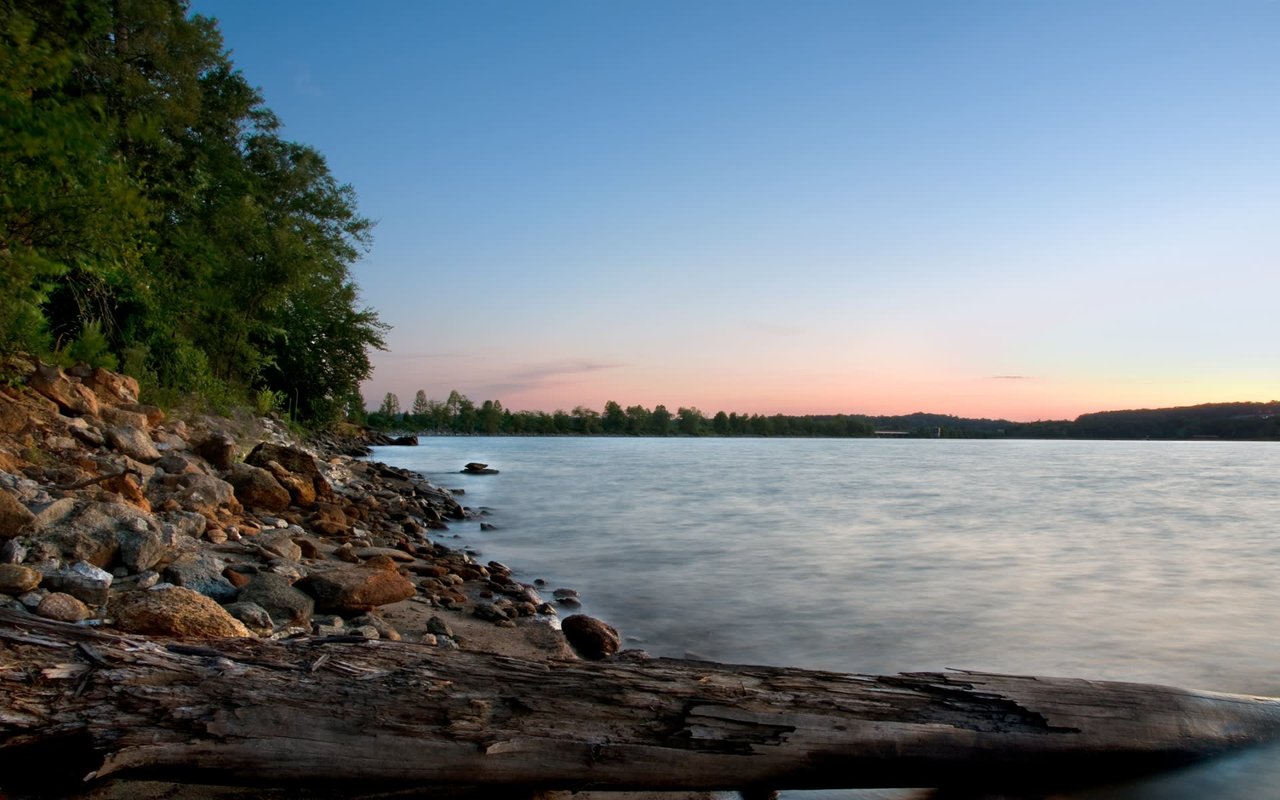
The Corps has also said what that recovered lake will look like. 11Alive reported that at 656 feet, the Corps expects dry shorelines and reduced dock visibility that could affect property values. It also expects exposed shallow underwater hazards and designated swim beaches that may become unusable.
For a Hartwell lot, the depth that matters is the depth at 656, and neither a listing description nor an old permit records that number.
The Shoreline Management Plan already has a tool for low water, and the Corps confirmed in October that it still applies. During low water, permit holders may "chase water" by moving a dock out to stay afloat. The move can't block access to other docks or coves, impede navigation, or create safety hazards. When levels return to normal, owners must move the dock back to its permitted location and pull any temporary anchor pins.
In the Corps' recording of the October 8 meeting, Whiting described how the Corps handles this in a crowded cove:
"If neighbors can get together and chase and be neighborly within a cove, then go for it. The leapfrogging, we don't allow that... the 50-foot distances that we usually state goes out the window. But we'll let people neighborly chase water and throw those distances out."
The flip side came a moment later. A caller asked whether one neighbor's refusal to move would leave everyone behind them stuck, and Whiting confirmed it: "That's correct. No leapfrogging." On a narrow cove, a dock's practical reach in a dry year depends partly on the docks between it and open water, and on the people who own them.
Two other options came up in the same session.
Any permanent change goes through a stricter gate. The plan requires a state-licensed structural engineer to approve all plans for new docks, new gangwalks and modifications to existing ones. A Corps ranger may also defer a decision to issue or modify a dock permit while the lake is below 656 feet. As of October 25, the lake is below 656. Nothing in the October 8 session announced a faster or relaxed process for dock changes. Reviews stay tied to the 660 reference.
The timeline matters because it decides how many buying and selling seasons this affects. The Corps says a Dam Safety Modification Study typically takes up to two years, and design, funding approval and construction can take five years or more. At the September 23 meeting, FOX Carolina reported Corps officials saying a permanent fix could take around 10 years and that the study's start date depended on funding.
The funding question moved in mid-October. The Lake Hartwell Association reported that Sen. Graham announced on October 16 a commitment from Acting Assistant Secretary of the Army Lee Forsgren. Under that commitment, the Clemson Saddle Dike becomes the Corps' highest-priority dam safety issue in the country, and the Dam Safety Modification Study goes into the Corps' FY2027 work plan. The same week, the association reported that more than 300 people came to its October 15 annual meeting in Anderson, where Corps representatives spoke about the restrictions. Georgia State Rep. Alan Powell urged residents in both states to ask their elected officials to fund the study in that work plan. A citizen petition asking Congress to speed up the repair had more than 3,800 signatures by early September, WLHR reported.
A funded study speeds up the start. It doesn't change the Corps' own estimate that building the fix comes after the study and takes years. Anyone buying or listing a Hartwell waterfront home this fall should plan for 656 as the normal lake for the life of an ordinary mortgage rate lock, an ordinary listing, and probably several summers after closing.
Each of these steps comes straight from the rules above.
Sellers face the same arithmetic from the other side. A listing that describes deep water "at full pool" now has two possible meanings, and buyers who have been following the Corps' meetings will ask which one it is. The depth at 656 is the number worth having ready.
This post is general information about published Corps rules, not legal or financial advice. Confirm your own property's permit status and options with the Hartwell Project Office and the right professionals.
If you're weighing a Hartwell waterfront purchase or getting ready to list one, Daniel Sanders & Co. can help you get the 656 answer before you commit, from the depth at the dock to a conversation with the Corps about what that cove allows. Reach out, and we'll work through it together.
Stay up to date on the latest real estate trends.

Cozy Reading Space and Library Design Tips for Homes in Clemson.

Designing a Media Room Built for Great Movie Nights in Clemson.
Here at Daniel Sanders & Co., Keller Williams Clemson we understand how important buying or selling a home is. It is not just a transaction, but a life changing event. That is why we strive to provide the most professional and personal touch to every transaction we handle.