The New Lake Keowee Dock Rule That Reverses the Old Buying Playbook
September 17, 2026
September 17, 2026
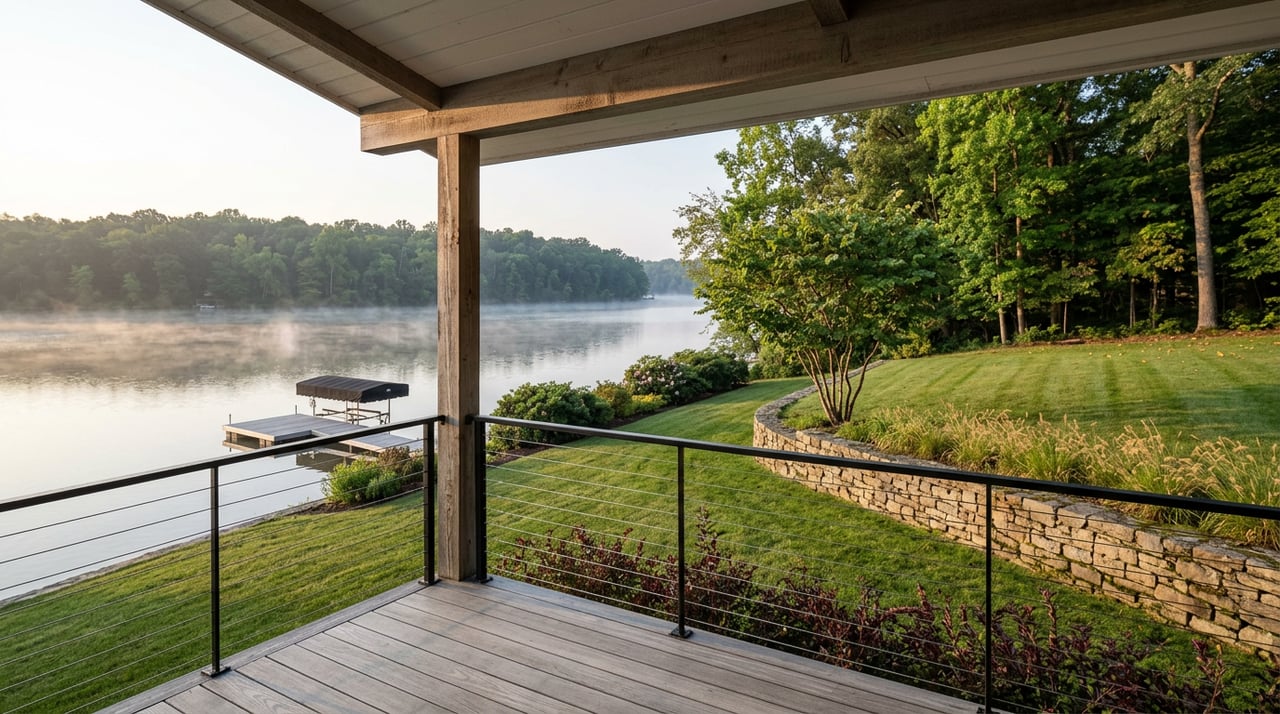
For years, the smart move on Lake Keowee was simple. Buy the lot first. Lock in the dock rights while the lot is still raw ground. Build the house whenever you're ready, on your own timeline, with a dock already waiting for you. That sequence is the reason so many Keowee lots sold with "dock approved" or "dock permitted" in the listing description, and why buyers treated dock rights as something you secured early and built around later.
As of July 1, 2026, that sequence is dead. Duke Energy's Lake Services division, which controls every private dock on the lake, will no longer even review a new dock application if there is no home built on the lot. The rule change is posted directly on Duke Energy's own permitting page, and the Western Upstate Association of REALTORS flagged it to its members in a September 2026 market report aimed specifically at agents working Keowee, Hartwell, and Jocassee. If you are shopping vacant waterfront land on this lake right now, the order you used to follow no longer works, and understanding why matters more than the rule itself.
Lake Keowee is not a public lake in the way most buyers assume. Duke Energy owns and manages the lakebed and shoreline under a federal license from the Federal Energy Regulatory Commission for what's called the Keowee-Toxaway Hydroelectric Project. That license requires Duke Energy to maintain a Shoreline Management Plan governing every dock, boathouse, and stretch of riprap along the water. A dock permit here isn't a courtesy. It's a revocable authorization tied to a specific structure at a specific address, and until this year, Duke Energy would review that authorization whether or not a house existed on the property.
That's what made the old strategy work. A buyer could close on a raw lot, submit a dock application with a survey and shoreline photo, pay the fees, and have a permitted dock sitting on the water years before ground broke on the house. The dock became a placeholder, a way to lock in value and start using the lake immediately.
Duke Energy's new policy removes that placeholder entirely. The change applies to all Duke Energy lakes, not just Keowee, and it applies specifically to new private dock applications, not to shoreline stabilization work. If your lot has no home on it, Lake Services will not open your dock file.
The Watchdog Report clarified the part that matters most for anyone mid-transaction. Duke Energy isn't refusing to issue dock permits on building lots. It's requiring the home to be "in the dry," construction-industry shorthand for the point when a structure has its roof, windows, and doors in place enough to keep weather out, before the dock application will even be considered. Duke Energy described this as a shift in timing, not a denial of dock rights.
That distinction reshapes the financial planning around a Keowee lot purchase. Under the old rule, a buyer's carrying costs on a vacant lot could be partially offset by lake access almost immediately. Under the new one, dock use isn't available until framing is well underway, which means a buyer financing a build needs to budget for a longer stretch without a functioning dock and factor that into how quickly they actually want to break ground after closing.
One thing the rule doesn't touch: if a lot already has a legally permitted dock in place, nothing changes. The new review restriction is about new applications on lots without a home, not about existing, compliant structures.
There's a second friction that predates this year's rule and still catches buyers off guard just as often, maybe more. A Lake Keowee dock permit is issued to a person, not attached to a parcel the way a survey or an easement is. When a home with an existing dock changes hands, the permit does not transfer automatically at closing.
The buyer has to file a transfer application with Duke Energy Lake Services, referencing the dock's tag number, and pay a transfer fee before the dock is legally theirs to use. Duke Energy does not accept digital signatures on these documents, and buyers who assume the paperwork can wait until after moving in sometimes find themselves using a dock that is, on paper, still permitted to the previous owner.
Before writing an offer on any home with an existing dock, a buyer should confirm three things:
None of this requires a lawyer to sort out, but it does require asking for the permit file before due diligence ends, not after keys change hands.
Buyers who've spent any time comparing Lake Keowee to Lake Hartwell sometimes assume the dock rules are roughly interchangeable since both are Upstate reservoirs with similar boating culture. They aren't, and the difference comes down to who actually holds authority over the shoreline.
Hartwell sits on land managed by the U.S. Army Corps of Engineers, which regulates dock construction under Section 10 of the Rivers and Harbors Act, giving the Corps direct authority over the structures themselves. Keowee works differently. Federal permitting records show that Army Corps involvement on Lake Keowee is limited to Section 404 of the Clean Water Act, which covers dredging and fill activity, not general dock authorization. The actual landlord for docks on Keowee is Duke Energy, operating under its FERC license and Shoreline Management Plan.
Practically, that means a buyer moving from Hartwell to Keowee, or comparing lots across both lakes, needs two separate mental models. The agency you'd call with a Hartwell dock question isn't the one that controls the same question on Keowee. Assuming otherwise is how buyers end up submitting paperwork to the wrong office and losing weeks in the process.
None of this would matter as much if dock access were a minor line item. It isn't. Waterfront homes on Lake Keowee were commanding roughly $537 per square foot as of August 2026, compared to about $191 per square foot for comparable non-waterfront homes in the same communities, a gap regional market analysis pegged at a 181 percent premium, well above the 53 percent national average lakefront premium.
That spread isn't really paying for the view. Plenty of interior lots a street back from the water offer similar scenery without the price tag. What the premium is actually buying is the dock, and by extension, the permitted right to put a boat in the water from your own property. Buyable waterfront frontage on Keowee is fixed. It doesn't expand the way a subdivision can. Multiple listing data from earlier in 2026 showed inventory loosening across waterfront homes, interior community homes, and vacant lots alike, but agents in the market noted that well-priced, dock-ready waterfront still moved quickly while average listings sat. The new permitting timeline makes an already scarce asset, a legally usable dock, that much more valuable to get right before closing rather than after.
For anyone actively looking at vacant land on the lake right now, the due diligence sequence has changed along with the rule:
Does this rule mean I can't build a dock if I buy vacant land on Keowee? No. It means the timing changes. Duke Energy will review your application once your home has reached the "in the dry" stage of construction, not before.
Does the rule affect docks that are already built and permitted? No. Existing, legally permitted docks are unaffected. The change applies only to new applications on lots without a home.
Is this rule specific to Lake Keowee? No. Duke Energy applied it across all the lakes it manages, which includes Keowee and Jocassee.
The mechanics here aren't complicated once you know them, but they're easy to miss if you're working from an outdated buyer's guide or comparing Keowee to a lake governed by a different agency entirely. If you're weighing a lot purchase or a home with an existing dock on Lake Keowee, Danny Sanders can walk the shoreline classification and permit history with you before you write an offer, not after you've already found out the hard way.
Stay up to date on the latest real estate trends.

Cozy Reading Space and Library Design Tips for Homes in Clemson.

Designing a Media Room Built for Great Movie Nights in Clemson.

Here at Daniel Sanders & Co., Keller Williams Clemson we understand how important buying or selling a home is. It is not just a transaction, but a life changing event. That is why we strive to provide the most professional and personal touch to every transaction we handle.