By Daniel Sanders
Few things capture the spirit of Upstate South Carolina living quite like a Saturday afternoon spent grilling in the open air, with the foothills in the distance and Lake Hartwell shimmering somewhere beyond the treeline. If you own a home here, or if you are searching for one, an outdoor kitchen is one of the smartest ways to extend how you use your property from early spring through football season. The right setup turns a plain patio into the heart of your home's entertaining life.
Clemson's mild seasons, lake-oriented lifestyle, and deep love of game-day gatherings make outdoor cooking spaces especially rewarding here. Whether you are picturing a cozy grilling station tucked beside a screened porch or a full outdoor kitchen with a pizza oven and bar seating, the design choices you make will shape how often you actually use these features.
You want a space that fits the way you live, holds up to the humidity, and adds real value to your property. Below, you will find design ideas built for Clemson homes, along with practical guidance on layout, materials, and the features that matter most in this part of South Carolina.
Key Takeaways
- Clemson's mild climate and lake culture make outdoor kitchens usable across most of the year, which is why they rank among the most popular upgrades for Clemson real estate.
- A functional grilling station follows the classic work triangle, balancing the grill, prep counters, and storage for smooth movement while you cook.
- Weather-resistant materials, such as stainless steel, natural stone, and sealed concrete, hold up best against Upstate South Carolina’s humidity and temperature swings.
- Thoughtful design around shade, seating, and flow makes your outdoor kitchen ideal for game-day crowds and quiet lake evenings alike.
- A well-built outdoor kitchen can strengthen resale appeal, making it a strategic addition for homes in Clemson.
What Makes an Outdoor Kitchen Work in Clemson's Climate?
An outdoor kitchen works well in Clemson because the region's long, temperate shoulder seasons and warm summers give you the chance to cook and entertain outside for a significant portion of the year. Spring and fall are especially forgiving, so a covered or partially shaded station lets you host comfortably even when the afternoon sun is strong or a quick summer shower rolls through.
Upstate South Carolina does bring real humidity, which is the single biggest factor to design around. Moisture in the air affects everything from how your appliances age to how your countertops wear over time. Building in proper drainage, ventilation, and covered zones keeps your space enjoyable and low-maintenance. A pergola, a pavilion roof, or an extended eave gives you protection from both sun and rain while keeping the open-air feel that makes outdoor cooking special in the first place.
Positioning also matters more than most people expect. Orienting your grilling station to catch the evening breeze off the lake, or tucking it against the house for wind protection, changes how comfortable the space feels during a long cookout.
Many Clemson homes sit on gently sloped, wooded lots, so working with your natural grade and tree cover can give you built-in shade and a beautiful backdrop.
What to Plan for in Upstate South Carolina’s Climate
- Cover at least part of the cooking zone with a pergola, pavilion, or extended roofline to guard against sun and sudden rain.
- Build in a slight slope and drainage channels so that water moves away from your appliances and seating.
- Choose a location that captures evening airflow, since a breeze makes summer grilling far more pleasant.
- Use tree cover and natural grade to your advantage rather than fighting the existing landscape.
What Should You Include in a Grilling Station?
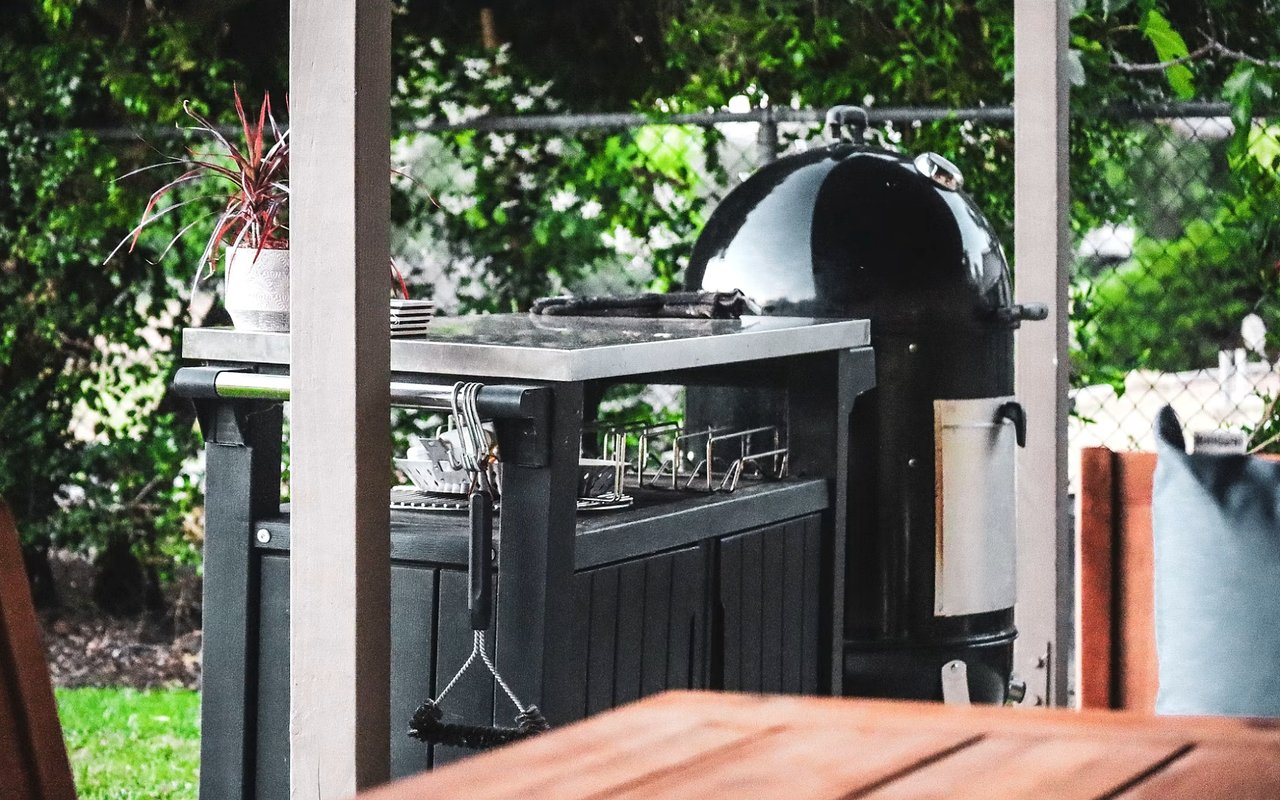
A useful grilling station for your Clemson home includes a primary grill, generous prep counters, weatherproof storage, and a dedicated serving area, all arranged so that you can move easily between them. This layout follows the classic kitchen work triangle, keeping your grill, prep space, and cleanup zone within a few steps of one another so that cooking for a crowd never feels chaotic.
Start with the grill itself, then build outward based on how you like to cook. If you smoke briskets and slow-cook for tailgates, you may want a built-in smoker or a dedicated ceramic cooker alongside your gas grill. If pizza nights are your thing, a wood-fired oven becomes a centerpiece that guests gather around. A side burner is a small addition that pays off constantly, letting you simmer sauces or boil low-country shrimp without running back to the indoor kitchen.
Storage and utility features are what make a station truly self-sufficient. A weatherproof cabinet keeps tools and grilling supplies close, while an outdoor sink and a compact refrigerator mean you are not constantly walking inside. For homes in Clemson where entertaining tends to spill outdoors for hours, that self-contained convenience is what keeps guests and the host relaxed and in one place.
Top Features Worth Building In
- A primary grill sized to your typical crowd, with room to expand later if you host often.
- Ample prep counter space on both sides of the grill so that you always have a landing zone.
- An outdoor sink and a beverage refrigerator to minimize trips back into the house.
- Weather-sealed storage cabinets for tools, fuel, and serving pieces.
- A dedicated bar or serving ledge where guests can gather without crowding the cook.
How Do You Design an Outdoor Kitchen for Game-Day and Lake Entertaining?
You can design an outdoor kitchen for entertaining in your Clemson home by prioritizing generous seating, clear traffic flow, and a layout that keeps the cook connected to the crowd. In a town that lives and breathes Tigers football, your backyard often becomes gathering headquarters on game days, so the space needs to handle a group comfortably without feeling cramped.
Seating is the foundation. A raised bar counter with stools lets guests sit and chat while you cook, and it doubles as an overflow serving surface when the food comes off the grill. Pair that with a nearby lounge or dining area, ideally under cover, so that people can settle in for the long haul. Zoning the space into a cooking area, a bar area, and a relaxed seating area helps a large group spread out naturally instead of bunching around the grill.
For lakefront and lake-adjacent properties in Clemson, the design should draw the eye toward the water. Orienting your seating to frame the views of Lake Hartwell, adding a fire feature for cooler evenings, and keeping sightlines open makes the whole space feel like a natural extension of the setting. If you are exploring waterfront or wooded lots among Clemson homes, thinking early about where an outdoor kitchen could go helps you picture the property's full entertaining potential before you ever move in.
How to Set Up Entertaining-Focused Space
- Include bar-height seating at the cooking counter so that guests can keep you company while you grill.
- Create separate zones for cooking, dining, and lounging to help a crowd spread out comfortably.
- Add a fire pit or fireplace to extend the usable hours into cool evenings and late-season game days.
- Frame the layout around your best view, whether that is the lake, the treeline, or the sunset.
- Leave clear walking paths between the house, the grill, and the seating so that foot traffic flows smoothly.
What Materials Hold Up Best for Outdoor Kitchens in Upstate South Carolina?
The materials that hold up best in Clemson's climate are stainless steel, natural stone, sealed concrete, and weather-rated composites, all chosen for their resistance to humidity and temperature changes. Because Upstate South Carolina cycles through warm, moist summers and occasional winter freezes, durability should guide nearly every material decision you make.
For appliances and cabinetry, marine-grade or high-quality stainless steel resists rust and cleans up easily, making it the standard for built-in grills and drawers. For countertops, natural stone like granite offers timeless looks and heat resistance, while sealed concrete gives you a modern, custom finish that stands up to the elements when maintained. Porcelain tile and dense composite surfaces are also excellent choices that resist fading and staining over the years.
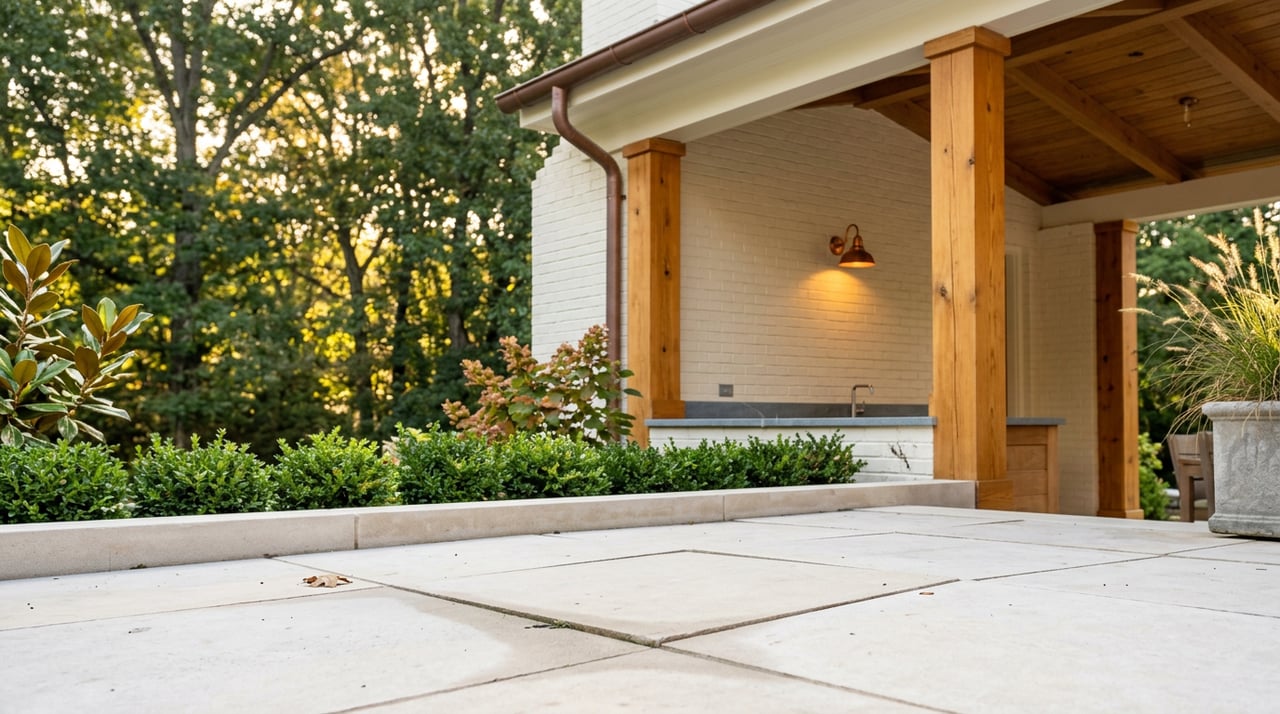
Flooring and structure deserve the same attention. Textured stone, porcelain pavers, or stamped concrete give you slip resistance underfoot, which matters near a lake where surfaces stay damp. For any overhead structure, cedar, powder-coated aluminum, or treated timber balances beauty with longevity.
Investing in the right materials up front means your outdoor kitchen keeps looking sharp and functioning well, which protects both your enjoyment and the long-term value of your Clemson home.
What to Look For in Durable Materials
- Choose marine-grade or high-quality stainless steel for grills, drawers, and cabinet doors.
- Select granite, sealed concrete, or porcelain for countertops that resist heat and moisture.
- Use textured pavers or stamped concrete for footing that stays safe when wet.
- Pick cedar, treated timber, or powder-coated aluminum for pergolas and overhead cover.
- Prioritize sealed and weather-rated finishes so that maintenance stays simple season after season.
FAQs
Is an Outdoor Kitchen Worth It in Clemson?
Yes, an outdoor kitchen is a worthwhile investment for most Clemson homes, thanks to the region's long entertaining season and strong culture of outdoor gatherings. Between mild springs and falls, lake living, and game-day hosting, you get plenty of use out of the space. Beyond daily enjoyment, a well-designed outdoor kitchen tends to appeal to future buyers, which can make it a smart addition when you consider resale value in Clemson real estate.
How Much Space Do You Need for a Grilling Station?
You can build a functional grilling station in as little as eight to ten linear feet, while a full outdoor kitchen with dining and lounge zones often works best with a patio of two hundred square feet or more. The right size depends on how you entertain and the layout of your lot. Many Clemson homes offer generous backyards and sloped, wooded lots that lend themselves beautifully to tiered or zoned outdoor cooking spaces.
What Is the Best Layout for an Outdoor Kitchen?
The best layout follows the work triangle, keeping the grill, prep counters, and cleanup area within easy reach of one another. For entertaining-focused homes in Clemson, adding a bar counter with seating keeps guests engaged while you cook.
Can an Outdoor Kitchen Add Value to My Home?
Yes, a quality outdoor kitchen can strengthen your home's appeal and support its value, especially in a lifestyle-driven real estate market like Clemson. Buyers here often prioritize outdoor living and lake-oriented entertaining, so a durable, well-designed cooking space becomes a selling point.
Bring Your Vision to Life in Clemson
An outdoor kitchen is more than a grill and a countertop; it is a way to make the most of everything Clemson living offers, from lakeside evenings to packed game-day afternoons. The best designs feel effortless because they were planned with real Upstate South Carolina living in mind.
If you are ready to explore
homes for sale in Clemson or want guidance on features that add lasting value, reach out to me,
Daniel Sanders at Daniel Sanders & Co. Let's talk about your goals and find a home where your next great cookout is waiting to happen.